|
WHICH WAY
FOR THE BEATLES' APPLE CORPS?
Now that the mercenary,
predictable CEO Jeff Jones is gone, what direction will the once-idealistic company take?
Will the creative potential of The Beatles' archive at last be mined?
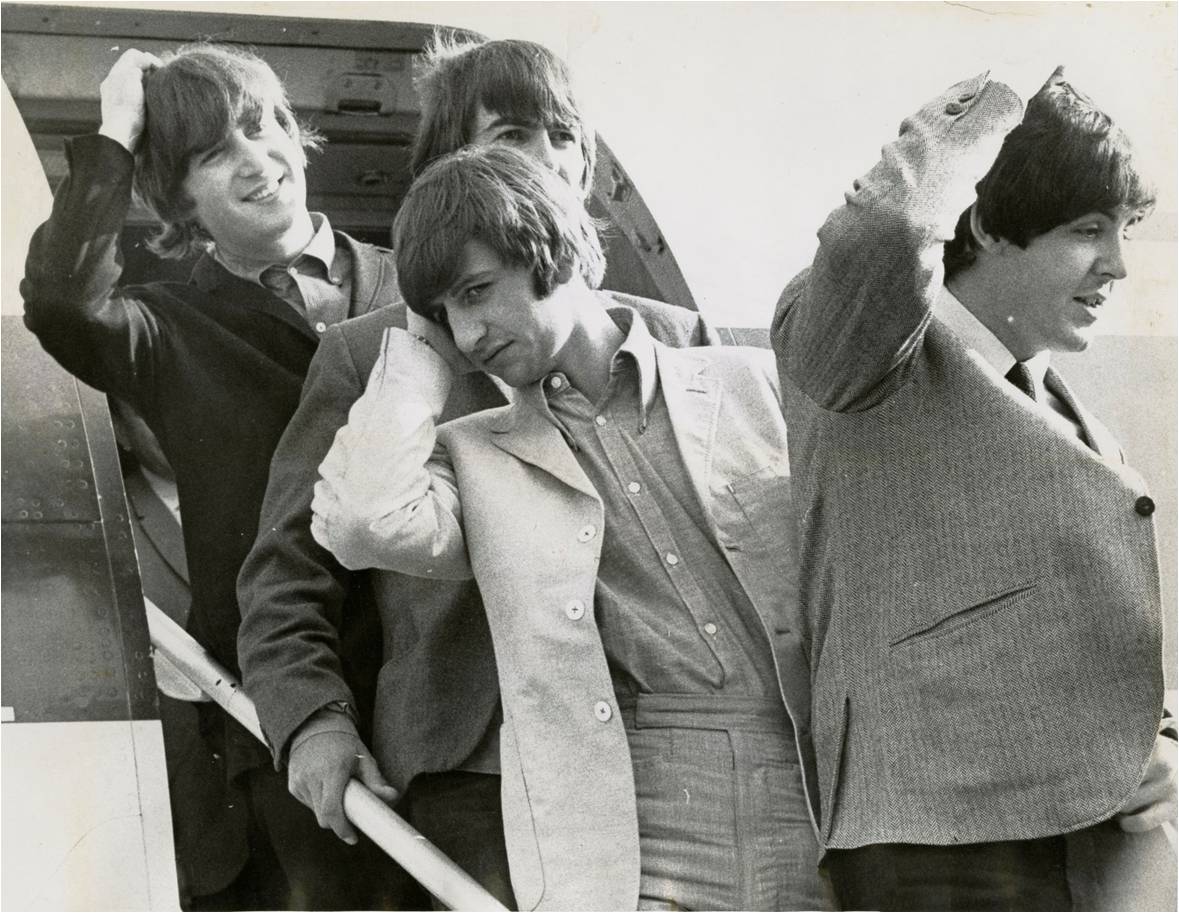
by Rip Rense
(Feb. 27, 2025)
Apple Corps Ltd., founded by The Beatles in 1968
as a Utopian ideal where all artists would be welcome, has long since become
like any other mighty corporation---mercenary and calculating. Creatively,
imaginatively curating the Beatles' vast archive, and serving the interests
of fans, has long taken a back seat to the three r’s of music industry
exploitation: re-releases, remasters, and remixes.
As John Lennon used
to sing, tongue only partly in cheek: Give me money, that's what I want.
. .
What, after all, was Apple thinking, reissuing U.S. mono
versions of the first seven Beatles LPs for Christmas, 2024? (Six, really,
as “The Beatles’ Story” is a documentary.) The cynical calculus: X-million fans
would buy
the re-cycled vinyl ($300 per box!), never mind that they probably already
own the
albums in multiple forms. It’s a guaranteed greenback gusher, cashing in on
so-called
“completist” mentality (read: obsessive-compulsive disorder) and, to a less extent, recent generations who
consider LP’s to be “cool.”
All in all, a far
cry from the company's original brief:
to be innovative, original, give the fans
value-for-money (a Beatles credo)---and to showcase artists in pop,
jazz, classical, avant-garde music---whether
they were well-known or nobodies. While it is fact that the company was
founded to rescue The Beatles from massive British income tax, Apple was
still a radically
populist---not primarily profit-based---gambit.
|
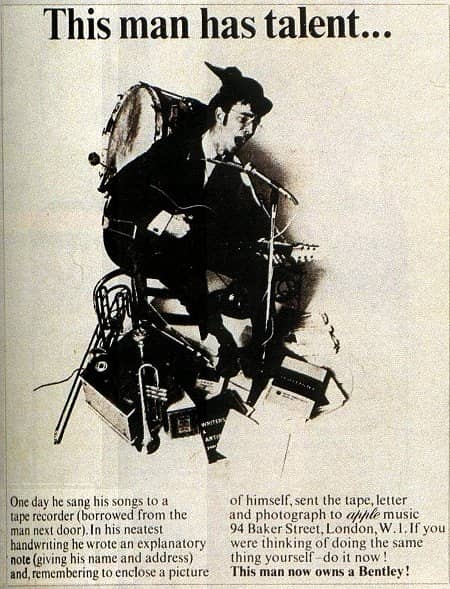
The original ad for Apple as it appeared in many newspapers in
1968. |
Yet with the exception of the
revelatory Peter Jackson-directed 2021 series, “The Beatles: Get Back,”
all the Apple releases during the 17-year tenure of recently resigned Apple CEO
Jeff Jones have served the coffers, less the craft. And “Get Back” was an
accident. First-tier Beatles fan Jackson was hired for a different project,
an interactive concept, never realized. He asked to take a stab at
creating a
new movie from the long-mothballed “Get Back” footage, and then cleverly
talked (if not tricked) releasing company Disney into a nearly eight-hour
cable series. (Disney, not understanding fan interest, later refused to add
bonus footage to the DVD, resulting in disappointing sales.)
The pre-Jones Apple era was inventive and promising,
kicking off with the massive George Martin-produced Beatles Anthology in the
mid-90’s, followed by the George Harrison-instigated “Yellow Submarine
Soundtrack,” a CD of all songs from the movie issued for Christmas, 1999.
This marked the first time that new mixes of Beatles songs were presented (done
elegantly by Peter Cobbin, who subsequently was bumped aside by Martin's
son, Giles.)
(Apple
had been dormant for decades after The Beatles' break-up in 1970, not
reviving until the mid-90s for Anthology---a documentary film, book,
and three double-CD releases of never-before issued outtakes, live
performances, auditions, demos---all overseen by Paul McCartney, George
Harrision, Ringo Starr, Yoko Ono (for Lennon's estate), and Martin.)
 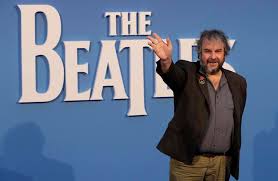
OUT: predictable CEO Jones.
IN? Creative "Fanboy" Jackson |
Next came a huge surprise to fans: the McCartney pet project, “Let it Be. . .Naked” (2003),
an effort to, in Paul's mind, set right the "Let it Be" album which he
considered to have been botched by Lennon-appointed producer Phil Spector
(the McCartney take is far more cohesive and polished), followed by the
wildly imaginative George/Giles Martin production, “The Beatles Love”
(2006), a CD compendium of wizardly mash-ups of songs done for the (recently
closed) Las Vegas Cirque du Soleil. "Love" holds up splendidly, a sparkling
ride of clever song hybrids and surprise arrangements.
Then Jones
arrived.
Boom.
He came
direct from the commercial monolith, Sony, in 2007, where he had been an
executive vice-president, and for Beatles releases, that was creatively
that. Commercial monolith-ism took over. Consider the Jones era projects:
*The remastered CD’s of 2009 were welcome, long overdue, but
ultimately just another way to sell the same albums again.
*The
incredibly expensive boxed set remixes of “Sgt. Pepper,” the “white
album,” “Let it Be,” “Abbey Road,” the so-called red and blue compilations
are sonically bigger, louder, more discrete---but are, in the end, the same
songs sold over again (yes, plus grab-bags of outtakes.) They are also very much a mixed blessing:
producer Giles Martin has extensively meddled with the original mixes,
essentially replacing the work done so artfully (with comparatively limited
technology) by. . .his own father, and The Beatles. Result: the souped-up
Giles remixes can sound cluttered (see: “Day Tripper”). Tightness and dynamics of the
rather miraculous original
mixes have often been sacrificed to “kitchen sink” philosophy of
giving voice to every plink and plunk. And then there is Giles’ mixing judgement, which, among other crimes,
frequently renders Paul McCartney’s
lyrical, carefully crafted bass lines---integral to song arrangements---as rumbly background
(see "Revolution 1") as if they are merely part of the rhythm section.
Gasp.
*The “bonus”
CD’s of outtakes and rehearsals included in those boxed sets, while they are
treasures, have been presented in a jumble, as leftovers and curios, chosen
subjectively, even capriciously, by Giles. In the case of the especially fascinating “white
album” outtakes, he deliberately did not even mix them, with
the flimsy justification of wanting fans to hear them as they were found.
This was a huge missed opportunity (more about this later.)
*The
“Eight Days A Week” film/CD live project is simply an embarrassment. It
started out well, intended to be a comprehensive, incisive look at exactly how The
Beatles evolved from scruffs messing with guitars into a tight, compelling performing
unit, including many rare performances. Great idea. But Jones scuttled it(!), instead hiring Ron Howard to put together a dull,
predictable general audience documentary, with the would-be comprehensive
live album reduced to “Eight Days a Week: Live at the Hollywood Bowl,”
released in 2016. Neither movie nor film acknowledged the huge amount of
surgery done on the music to make it more appealing to the current
(streaming) demographic,
which (Giles said) allegedly would not comprehend “original patina”
glitches, pitchiness. Just shameful, all of it. A wasted opportunity, an
unabashed cash-in.
*The
Martin Scorcese-produced “Beatles ‘64” documentary, while pleasant enough
viewing, contained no revelations, and covered familiar territory more
authentically revealed in Albert and David Maysles’ documentary, “The First U.S.
Visit.” In a word: redundant. What’s more, as reviews noted, there was a surplus of
irrelevant talking-head interviews (Terence
Trent D’Arby? Really?) that too often interrupted thrillingly restored (by
Peter Jackson) live
performances, and the inevitable cliched
contextualizing with the assassination of President John F. Kennedy. A
compendium of the restored live performances alone would have been preferable, and more valuable, historically.
All of
which is to say, again, is that the idea of creatively presenting the remaining
music and footage in The Beatles’ archive was absolutely abandoned under Jones.
 |
How else to explain, for easy example, the downright miserly, token collection of
bonus tracks in the remixed “Let it Be” boxed set and DVD? At minimum, there should have
been: a CD cherry-picking all the best jams, outtakes, oldies, and complete
song performances done during the sprawling mono “Get Back” sessions, and a
DVD of complete studio performances of the principal songs from those
sessions, including alternate takes and the “rooftop” performance. Jackson's
now-celebrated breakthrough technology, which he dubbed MAL 9000 in honor of
The Beatles' beloved road manager, the late Mal Evans, marked the first time
in history that mono recordings could be broken into discrete tracks, and
then remixed into stereo. This should have been employed throughout the "Let
it Be" box, with first priority to create a performing
version of the band playing Harrison’s solo anthem, “All Things Must Pass,” culled from
rehearsal takes and Harrison’s own solo studio self-accompanied demo on his
birthday in 1969.
The one that got away during the sessions. But. . .
Didn’t
happen.
This is
nothing but neglect of history.
Insult to injury: “Get Back” director
Jackson, whose Beatles expertise is beyond challenge, urged Disney to issue
a few more hours of material in the “Get Back” DVD, but to no avail---and
Jones and
Apple did not step in. The result: with no incentive for fans to see
anything not available in the original streaming of the series, DVD sales
submarined.
Translation: the imaginative presentation of Beatles music and film was
mostly dismissed by Jones-era Apple as “fanboy” fare (Jackson’s amusing
term) allegedly of interest only to original fans. Further translation: dumbed
down for a mainstream buck. Yes, this is how commercial and corporate
Apple---founded as an anti-corporate champion of new
music---has become. If there is money in recycling albums that have been
released many times before, hey, it’s a go.
Which brings
us to this question: what is of more value: hearing an additional guitar note
or two, or clearer harmonies, in remixed songs (not to mention Giles
Martin's egregiously unmixed outtakes)---or hearing unreleased
and/or restored “new” Beatles music? Yes, new. The answer should be obvious. Yet
Apple, one supposes, might be of the opinion that any “new” material---such
as a MAL-realized Beatles version of “All Things Must Pass”---is of such
potential publicity and monetary value in the future, that it should not be
“wasted,” say, in a full album of such music.
This is all a
tragic disservice to The Beatles and George Martin, who, after all, produced
the most memorable body of popular music in history.
But now, with Jones’s
departure (rumor is that he was gently forced out), Apple now has a chance to reverse course and get back to the
spirit of what was happening from the mid-90's under former Apple CEO Neil Aspinall.
There is vast potential---something average listeners do not realize. Top priority, as
stated above: a “Get Back” sessions album (and DVD) of alternate
versions, jams, outtakes, oldies, studio and rooftop performances (including
a fully realized “All Things Must Pass”).
Following
are many new Beatles projects that do not seem likely to occur under
Apple’s leadership, unless Jackson or someone with his expertise and
“fanboy” enthusiasm takes over.
| The pre-Jones Apple era was very inventive and
promising, starting with the massive George Martin-produced
Anthology in the mid-90’s, followed by the George
Harrison-instigated “Yellow Submarine Soundtrack,” a CD of all songs
from the movie issued for Christmas, 1999. |
*Live
at the Star-Club: Jackson is on the record as wanting to give this
invaluable look at the early Beatles the MAL treatment. “I'd love to take
the Star Club tapes, best quality, and use our machine to basically split
them apart, and also. . .take an echoey, amateury recording in a club and
make it sound like it was in a studio,” Jackson told Beatles author Robert
Rodriguez in 2022. Is he working on it now? Unknown. But he---or
someone---should be. Performed in Hamburg at one of the band’s former
showcase clubs on or near Dec. 31, 1962, and released in various legally
contested configurations over the years, 33 songs were recorded by the
club’s manager, Adrian Barber, using a Grundig reel-to-reel and a single
microphone. Despite the dicey sound quality and various Beatles poo-pooing
the performance as half-hearted, the concert is tight, well done, great fun,
and features Ringo just four months into his Beatles tenure. Said Jackson:
“Can you somehow get this computer to transform the quality of the sound. .
.from the room sound and make sound like it was recorded at Abbey Road or
something? And the (sound) guy said yeah, it would take a little bit of
doing, but in theory, it's possible.” If accomplished, this would instantly
become the most historically important live Beatles recording (especially if
the blistering Harrison-sung “Red Hot,” a 1955 hit by by Billy “the Kid”
Emerson, is included.)
*Radio: All 275 live in-studio mono recordings of
88 different songs broadcast on the BBC (including 36 songs never recorded
for Beatles albums) are now fodder for multi-track MAL 9000 stereo. Will
Apple and Universal re-release all the BBC material, remixed? It does not
seem likely, but certainly those 36 songs never on the original albums would
seem a natural project. Imagine hearing them close to, or indistinguishable
from, studio presence, and it becomes tantamount to having three new
early/mid-60’s Beatles albums. That’s a wow. Just hearing the tinny
Lennon-McCartney rarity, “I’ll Be On My Way” improved to near-studio
ambience would justify the project, in my view. Historical value: restoring
the BBC broadcasts of live performances in early 1962 with Pete Best. They
are: March 7, the Playhouse Theatre, Hulme, Manchester, with “Dream Baby”
(Roy Orbison), “Memphis” (Chuck Berry), “Please Mr. Postman” (Motown), “Ask
My Why” (Lennon-McCartney), the rarity, “A Picture of You” (originally by
Joe Brown); and June 15, the Playhouse Theater, with “Ask Me Why,” the
standard, “Besame Mucho,” and “A Picture of You.”
The Escher Demos: Yes, these 27 songs written for
what became the “white album” (19 made it), recorded in mono in 1968 at
Harrison’s home in Escher, were finally released as part of the “white
album” boxed set in 2018, thank goodness. Is it too fine a point to
re-release them in MAL’ed multi-track stereo mixes? Doing so would
imbue them with big, full, detailed sound, effectively a live acoustic
Beatles performance, right in your living room. Wouldn’t it be preferable
for this to be released in maximum quality, rather than a batch of mono
tracks buried in a boxed set as a curio? This would amount to a brand-new
Beatles album of invaluable import.
Demos:
There are countless Beatles demos from the early days to the late. Some have
cropped up on Giles Martin-produced boxed sets, and some on Anthology
(and, of course, bootlegs), and they vary greatly in sound quality. Even
without MAL, a comprehensive survey of the demos---always of charm and
historical significance---is long overdue. MAL-“demixing” and remixing in
state-of-the-art sonic enhancement would make such a collection an
invaluable Beatles experience. Think: sketches for Van Gogh paintings.
Perhaps there would be more revelations a la the Lennon demo for a
plaintive ballad that morphed into “Yellow Submarine.” How about that early
demo of "What Goes On?" that is so different from the Rubber Soul
version? Maybe the legendary McCartney song, “Etcetera,” long in his
possession, might make its debut, along with other discoveries. The many
songs the band gave to other artists, from “Bad to Me” (Billy J. Kramer and
the Dakotas) to “I’m in Love” (The Fourmost) to “World Without Love” (Peter
and Gordon) to “Goodbye” (Mary Hopkin) to “Sour Milk Sea” (Jackie Lomax) are
essential. Even parts of that home jam from 1960 (with Stu Sutcliffe
fumbling around on bass on a couple numbers) might have a salvageable moment
or two. And although they weren’t demos, strictly speaking, the Quarrymen’s
1958 make-your-own-record takes of “In Spite of All the Danger” and “That’ll
Be The Day” could fit here. (Note: Jackson is on the record as wanting to
MAL both.)
*Other Live Concerts: Every mono live recording of
the group on tour is now up for MAL grabs. All can now be de-mixed,
multi-tracked and, uh, de-screamed---from Hollywood Bowl to Tokyo to Munich.
This is not to say that all such concerts should be done. Perhaps a
highlights---best of---package would be the way to go. Then there are more
historically interesting possibilities: the Cavern Club rehearsals in ’62,
shortly after Ringo joined (plus the filmed-for-TV “Some Other Guy” and
“Kansas City”); the July ’62 Cavern Club complete performance (with Pete
Best), reportedly owned by McCartney; the recently discovered hour-long
20-song set from Stowe (boys’) School in Buckhinghamshire April 4, 1963 (screamless---with
genuine fans yelling out requests!); the July 7, 1957 Quarrymen performance
where 15-year-old McCartney watched 16-year-old Lennon (and later was
introduced to him, thank goodness).
*Television: The better performances from the
excellent “Blackpool Night Out” shows, the New Musical Express Pollwinners
Concerts from 1964 and ’65, “Morecombe and Wise,” “Shindig,” “The Ed
Sullivan Show,” “Ready Steady Go,” “Lucky Stars,” “Royal Variety Show,”
“Drop In” (Sweden), the Washington Coliseum concert (perhaps the low-volume
microphone problems can be fixed!). . .yes, all can now be MAL’ed and turned
into multi-track stereo. It would be tough to choose highlights only; the
sensational Washington show alone begs for full release.
New Beatles songs:
What?
Wasn’t “Now and Then” the last new Beatles song? Depends on how you
define the term. In what Jackson likes to call “fan-boy stuff,” there are
opportunities to create---yes, create---what can be described as new Beatles
songs. No, this does not mean artificially imitating voices and instruments,
perish the ridiculous thought. Two examples come to mind: using MAL to
remove Harrison’s vocal from the demo for his terrific song, “Sour Milk
Sea,” (given to old Liverpool crony Jackie Lomax, as one of Apple's first
releases by new artists), enhancing it, and replacing the Jackie Lomax
vocal. As is well known: Ringo, Paul, George, Eric Clapton, Nicky Hopkins
are on the Lomax recording. Would this constitute a Beatles song? Not
strictly speaking, but easily fits the bill in a “white album” sense, when
there were guest musicians and not every Beatle on each track. Similarly,
McCartney’s vocal on the demo for his wonderful, “Goodbye,” could replace
Mary Hopkin’s in the official 1968 version, which features Paul on
multi-instruments, and warm arrangement by Richard Hewson (who did “The Long
and Winding Road” and “Across the Universe.”) Again, a “white album”-ish
undertaking.
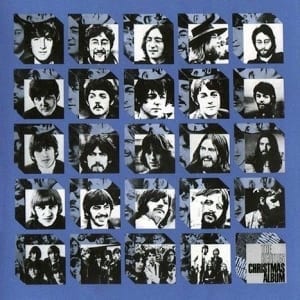
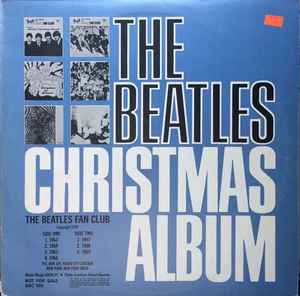
*The Beatles Christmas Album---Released to fans only as an
Apple LP in 1970, this has, incredibly, never otherwise been officially
issued. It contains all seven original messages sent to fans on flexi discs
from 1963 to 1970. It should be supplemented with Christmas message
outtakes, the six-minute goof, “Christmas Time is Here Again,” and why not
throw in a new “Beatles” Christmas EP with McCartney’s “Wonderful
Christmastime,” Lennon’s “Happy Xmas,” Harrison’s “Ding Dong, Ding Dong,”
and something from Ringo’s terrific Christmas album, such as “I Want to Be
Santa Claus.” Perhaps Paul and Ringo could be induced to write and sing a
new contribution for the set. (Yes, all the flexis were reissued in a
cynically priced $300 boxed set in 2017, but we’re talking about an
album here.) This would make a mint, could be issued in affordable
configurations, and make a hell of a lot of people happy.
*Alternate versions of albums---Releasing outtakes, rehearsals, embryonic takes
of Beatles songs in a jumble, as has happened with every Giles
Martin-remixed boxed set so far, is akin to discovering veins of gold and
not turning them into gorgeous jewelry, art, or sculpture. There are, in
some cases, full alternate albums to be created. What? Tampering with
history? Yes. What do you think remixing is? To leave the riches left behind
by The Beatles unmixed, unrestored, unreconstructed, is to leave diamonds
uncut and unpolished. Why not have a completely alternate version, say, of
“Revolver?” Just present it as such. Ditto for “Rubber Soul,” I suspect, and
possibly others. Such ventures should consist only of sufficiently
different finished versions of songs (the early take of
“Tomorrow Never Knows,” for example, or “Yellow Submarine” with all the
sound effects turned up), or they can be, yes, artificially realized (much as
George Martin did with a “Strawberry Fields Forever” collage on “Anthology 2.”) For
example, take the vibraphone instrumental backing for “I’m Only Sleeping”
done by George Martin. Lennon passed on this treatment, but fans have looped
it into a complete backing, and added the acoustic vocals (and guitars) from
an early take. The result: a completely new and viable version of the
song.
*Alternate
“white album.”---George Martin famously tried to persuade
the band to put out one strong album, rather than a double. Well, this
can still be done---but with very different versions of songs. Top of
the list: restoring Lennon’s original “Revolution” (later “Revolution 1”),
which evolved into about seven minutes of chaos and sound
sculpture. This approximately 13-minute version was bootlegged some years
back, but lacked Lennon’s lead guitar overdub and Martin’s brilliant horn
arrangement, as well as several tapes of Beatles vocals earmarked for
addition to the song. Why not restore it? That Giles Martin did not
do this for the “white album” boxed set was shocking. It amounts to an
entirely new Beatles work. Another “Revolution”
candidate: a sizzling uptempo version (released on the “white album” outtakes
discs) without the feedback on guitars, and vocals. Why not add vocals to
it, especially the “shoo-be-doo-wops" (which really should have been on the
original single.) Or just add them to the released single version. Also: “I’m So
Tired” with the Harrison guitar fills restored, “Yer Blues” with the dual
George and John guitar solos (properly mixed, unlike the Giles version), “While My Guitar Gently Weeps” (there
is the acoustic version with
George Martin orchestration, and the outtake electric version---which
could be made whole by simply adding the ending of the released version), and “Good Night,” the four-part harmony
take with John
accompanying on electric guitar. Further begging construction: the very
different early (unnumbered) instrumental outtake of “Everybody’s Got
Something to Hide Except for Me and My Monkey,” but with the vocals added
for a finished version (fans have done this to great effect on Youtube.)
  |
*Abbey Road as originally envisioned---George Martin and Paul
McCartney first wanted Abbey Road to be one huge suite of songs connected by
band interludes and/or original orchestral music by Martin. It would
effectively have been one gigantic symphonic medley, start to finish. Well.
. .it still can be. Think: orchestral overture, and orchestral interlude
between side one and two, with Beatles and/or Beatles-with-orchestra to
fashion segues between song (a la the mash-ups on "The Beatles Love.") Why not do it? Symphonic Abbey Road. Highly skilled contemporary composers are everywhere. Hire
one of them and put him or her to work with McCartney on how to frame the
whole album, and how to link the songs. Of course, George Martin’s original orchestrations should be left
intact---along with the medley on side two (a compromise reached with
Lennon, who absurdly thought the whole-album suite concept to be
pretentious.) George Martin's orchestrations, of course, could also be drawn upon (or stylistically imitated) for
overture and between-track passages. Not to replace Abbey Road, but to
create a fabulous alternate version.
*Album(s) of best alternate versions---If full alternate albums
seems too extreme, then why not a series of albums of the greatest alternate
versions/outtakes/restorations as described above? Grouped chronologically,
so as not to mix wildly different Beatles styles. Did such a thing ever
remotely occur to Jeff Jones?
*The
Beatles Live (Film Project)---Revive the original concept of the
film project that
tragically morphed into the bland “Eight Days a Week” film and the
accompanying, heavily doctored Hollywood Bowl album. Restore raw footage and
music to pristine condition with MAL 9000 under the supervision of Peter
Jackson. DVD and CD. The original brief: chronicle the development of The
Beatles from kids plinking guitars into a hot ensemble, documenting
everything from The Quarrymen through the Pete Best-era Beatles to the jaded
“old guys” on the Apple rooftop. Include never-before-released Cavern
material owned by McCartney. No one could do this better than Jackson. Movie
and boxed set.
*Magical Mystery Tour film, Special Edition---Yes, the knock on this
film is that it is wacky psychedelic slapdash indulgence, with flat spots.
Doesn’t matter. It’s the Beatles. The only thing better than Beatles is more
Beatles. Gather up all the outtakes, and there are many---all the cutting
room floor material---especially the part in the diner where Auntie Jessie
(Vaudeville veteran and actress Jessie Robins) plays the hell out of a drum
kit with a jazz band, and sings (much to Ringo's delight.) Re-cut the movie to include this, and more,
and also hire artists to make video sequences for additional songs not originally
in the film: “Hello Goodbye” (use the various promo films as a basis), “Baby
You’re a Rich Man,” “All You Need is Love” (the “Our World” live broadcast
would fit nicely), “You Know My Name (Look Up The Number)” (mostly recorded
in ’67.) Put Jackson in charge of this. (If the big race sequence is cut
down a bit, in the process, it wouldn’t break any hearts!) Maybe have “old Ringo”
and “old Paul” do cameos in their old wizard outfits. Hey, why not? This
could be wonderful. Did Jeff Jones ever even think of this?
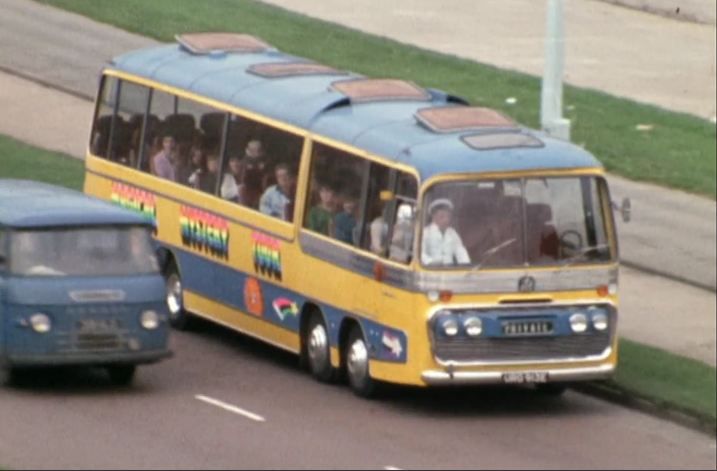
Why not an expanded special edition of "Magical Mystery Tour,"
with more footage and newly commissioned sequences for omitted songs
such as "Hello Goodbye" and "Baby You're a Rich Man?" |
*"It’s All Too Much,” Special Edition---This epic Harrison anthem
should have become a Beatles staple on par with “All You Need is Love,” but
due to slipshod production (no George Martin present) and being “thrown
away” on the original “Yellow Submarine” soundtrack album, it has never
gotten its
due arrangement or acclaim. This can be rectified today! The excellent
missing verse and bridge must be restored, for starters, and a badly needed
George Martin-esque orchestral backing could be composed by Giles Martin,
McCartney, and Ben Foster (the team that composed the strings for “Now and
Then.”) This would allow the song its full scope and breadth for the first
time, and imbue it with a grandeur merited by its subject matter. What a
fantastic tribute to Harrison this could be.
And here are a
couple of “fanboy fantasies:”
*"You’ll Know What to Do”---Fanciful? Sure. The second original
Harrison song written for The Beatles was found in a cupboard in George
Martin’s home as a studio demo from 1964 with Harrison accompanying himself
on electric guitar, and someone (probably Paul, given that Ringo was
hospitalized with tonsillitis) shaking a tambourine. Well, The Beatles’
rhythm section still exists! Why not convene Paul and Ringo to add bass and
drums to this good little tune? Harmony vocals? Why not invite Dhani and
Julian (and/or Sean) to sing them? This would “do right by George,” and give
the song full stature, rather than leaving it as a leftover, a curio. No,
it's not The Beatles, but. . .why not?
*"Bad to Me”---This
Lennon-McCartney original exists only as a demo by John and Paul with
acoustic guitars. With a MAL 9000 clean-up, it can be rendered close to
studio quality. Give it the same treatment as the one proposed for “You’ll
Know What to Do”---Ringo and Paul add the rhythm section, and invite Beatles
offspring to do additional harmony vocals, if deemed desirable. Guitar solo?
Let Paul play it. There are
other early demos where this approach is possible, including McCartney’s
“One and One is Two,” “I’m in Love.” And this, of course, along with “You’ll
Know What To Do,” could all be part of an album or boxed set of. .
.AI-upgraded Beatles demos.
Whether
one agrees with all of these suggestions or not, they demonstrate a
creative, imaginative approach to The Beatles archive that has been
exasperatingly absent under the mercenary Apple reign of Jones. If Apple's
original Utopian premise can't be revived, at least its "value for money"
integrity can be. Let it be hoped
that Jones is not replaced with another corporate CEO whose priority is money,
money, and also: money. Best candidate: Peter Jackson.
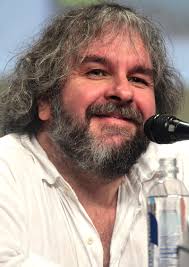
Jackson |
 |
Rip Rense is a veteran journalist and author who has been writing
about The Beatles since age 16. He is longtime contributing editor to
Beatlefan magazine.
BACK TO PAGE ONE |
